

Why Tobii Dynavox Has Taken Legal Action
Tobii Dynavox has filed a lawsuit against AbleNet to address concerns about how communication solutions are delivered and supported, as well as concerns about the unauthorized use of Tobii Dynavox software.
This action reflects our responsibility to protect patients, support clinicians, and uphold the standards that ensure communication technology is delivered safely, effectively, and with the long-term support patients depend on.
Speech generating devices are not consumer electronics. They are complex medical tools that require proper evaluation, customization, and ongoing support over time.
Tobii Dynavox alleges that AbleNet has engaged in practices that enable the use of Tobii Dynavox software on AbleNet devices without authorization, while avoiding the integration, clinical support, and long-term service that are essential to patient success.
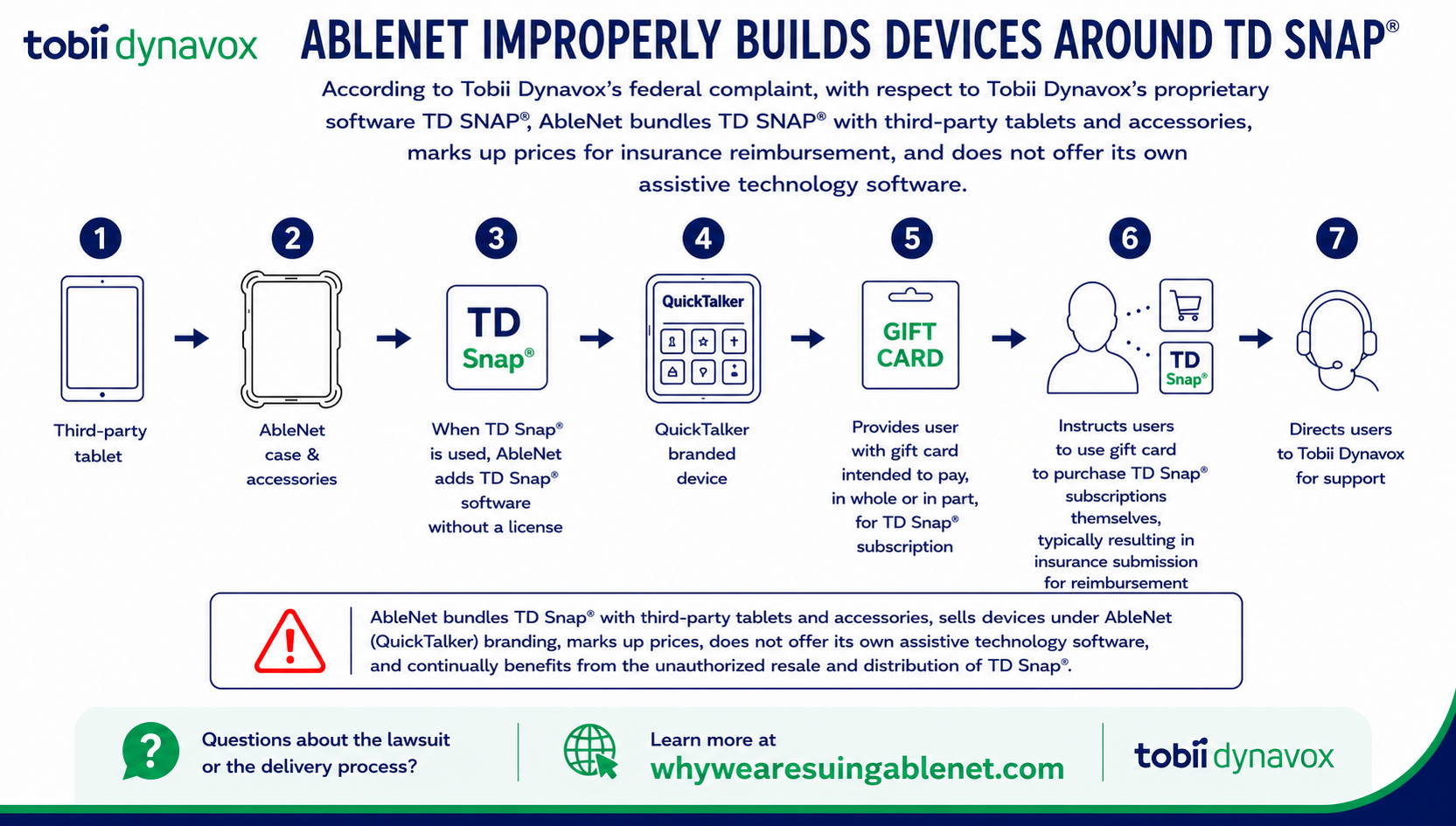
According to the complaint, these practices include instructing patients and, in some cases, clinicians to download TD Snap® software onto AbleNet devices themselves, often using gift cards provided by AbleNet to purchase the software on the App Store.
Efforts to Resolve the Issue
Tobii Dynavox has made multiple attempts over time to address these concerns directly with AbleNet, including formal correspondence and cease-and-desist requests.
Despite these efforts, the practices described in the complaint continued. As a result, Tobii Dynavox determined that legal action was necessary.
Importance to Patient Outcomes
For patients, communication devices are essential to daily life. Success depends not just on the technology itself, but on how it is delivered and supported.
Properly delivered communication solutions include:
- Clinical evaluation and prescription
- Device customization for the individual
- Training for patients and caregivers
- Ongoing technical and clinical support
When these elements are fragmented or bypassed, patients may not receive the full benefit of the technology, and clinicians may be left to fill gaps in support.
Concerns Raised in the Complaint
The lawsuit outlines several key concerns:
Unauthorized Software Use
Tobii Dynavox alleges that its TD Snap® software is being used on third-party devices in ways that violate licensing terms and intellectual property rights.
Workaround Methods to Enable Use
The complaint describes the use of gift cards and instructions to facilitate software downloads outside of authorized channels.
Lack of Integrated Support
AbleNet does not design or control the software it enables on its devices, and the complaint alleges it cannot provide full support for those applications.
Confusion in the Market
The complaint alleges that these practices may create confusion for patients, clinicians, and payors about whether devices are fully integrated and supported solutions.
Impact on Healthcare Programs
Speech generating devices are reimbursed through healthcare programs with expectations around delivery, documentation, and ongoing support. The lawsuit raises questions about how these responsibilities are managed.
What Tobii Dynavox Is Seeking
Through this lawsuit, Tobii Dynavox is seeking to:
- Stop unauthorized use of its software
- Prevent practices that create confusion in the market
- Protect patients and clinicians from gaps in support
- Uphold standards for how communication devices are delivered and supported
What This Is Not About
This lawsuit is not about limiting access to communication technology.
Tobii Dynavox supports broad access to communication tools and continues to invest in solutions that expand availability for patients and clinicians.
This action is about ensuring that communication devices are delivered responsibly, supported appropriately, and aligned with the standards expected in healthcare for long-term success.
Our Commitment
Tobii Dynavox remains committed to:
- Patient outcomes and long-term success
- Supporting clinicians and care teams
- Responsible innovation in communication technology
- Transparency and accountability in the healthcare system
We will continue to work with the AAC community to ensure that patients have access to communication solutions that are not only available, but effective, supported, and built for long-term use.
